contact@synergytop.com
 +1 619-349-4911




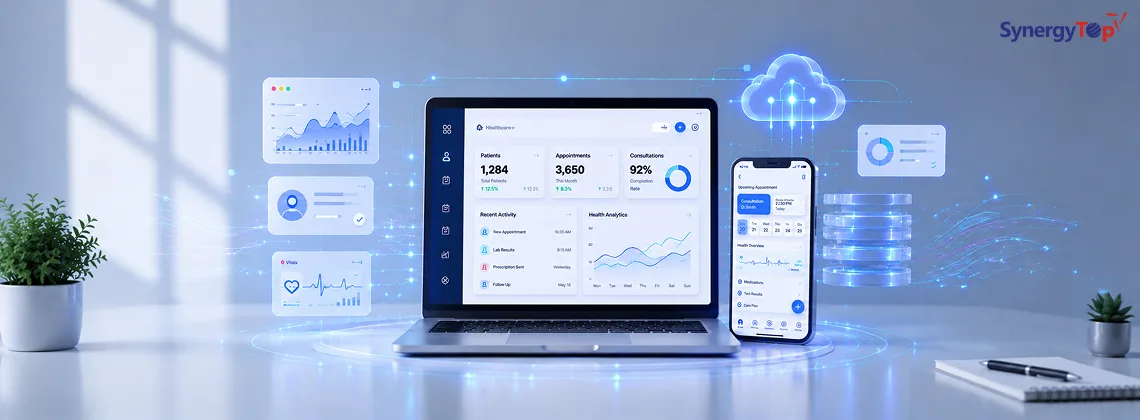


Most hospitals and clinics depended heavily on paper-based documentation. Patient files were stored in thick folders, doctors wrote notes by hand, and nurses often had to search through stacks of documents to locate important information. If a patient visited multiple departments, their records might travel physically from one desk to another. As the number of patients grew and medical data increased, this manual system became slower, harder to organize, and more prone to errors.
In the near past, patient data was stored in paper files in most hospitals and clinics. Notes were made by hand, nurses perused through huge folders, and medical records were stored in crammed cabinets. It might be time-consuming to find the history of a patient, and the process of information exchange across the departments was frequently slow. With the growth of the healthcare service and the growing amount of patient data, these traditional methods became hard to manage.
The Rise of EMR Systems in Digital Healthcare
This has been altered by the transition to digital healthcare. In the modern world, medical institutions are implementing new technologies that enable the storage and management of patient data in electronic format. EMR systems are one of the greatest technologies driving this change. These systems offer a virtual platform that medical providers can use to document, arrange, and retrieve medical data in a quicker, more structured manner.
The trend of increasing emr systems in healthcare is a sign of the necessity to have a more efficient and effective management of medical data. The information that hospitals and clinics produce on a daily basis is large in quantity and may comprise diagnoses, treatment records, laboratory results, and prescriptions. With medical emr systems, medical institutions are able to store all this information in a centralized digital system, which can enable the medical teams to access accurate patient records when they are required.
Improving Clinical Outcomes Through EMR Systems
The other reason healthcare providers use emr software is the fact that it enables improved care of patients. Having access to all the medical history of a patient, doctors are able to make better decisions concerning the treatment. Allergies, past conditions, or medication conflicts can also be identified with the help of the software. EMR systems assist healthcare professionals in providing safer, faster, and more effective care by enhancing the way medical information is recorded and shared.
What is an EMR System?
The question that many people pose is what are EMR systems in healthcare? An EMR system refers to an electronic system that provides a digital platform for storing patient medical information. It substitutes the traditional records that were on paper. This system is utilized by doctors and other healthcare personnel to record patient visits, diagnoses, treatment, and medication.
EMR Systems Meaning
Wondered what is emr systems? The meaning of EMR systems in healthcare can be straightforward. It is a computerized service that removes medical records in a healthcare organization electronically. These systems assist medical workers in handling clinical data effectively.
Explanation of Electronic Medical Record EMR System
The EMR system is an electronic medical record that consists of many components:
- Patient demographic information
- Medical history
- Lab test results
- Medication records
- Treatment plans
- Doctor notes
- Difference Betwe
Difference Between Paper Records and EMR Systems in Healthcare
Paper-based records are very constrained. They are hard to store, transmit, and revise. These issues are fixed by EMR systems that are used in healthcare.
| Paper Records | EMR Systems |
|---|---|
| Hard to store | Digital storage |
| Difficult to share | Easy data sharing |
| Risk of damage | Secure backup |
| Slow retrieval | Instant access |
How EMR Systems Work in Healthcare
The EMR system has a structured workflow.
- A patient consults a clinic or a hospital.
- The personnel in the system key in patient information.
- Diagnoses and treatment plans are noted by doctors.
- Results of laboratory tests and imaging reports are posted.
- Follow-up notes and prescriptions are added.
Role of Hospital EMR Systems
The EMR systems used in hospitals are intended to serve large hospitals. They handle thousands of patient records in a day. Such systems serve various departments, like:
- Emergency care
- Radiology
- Pharmacy
- Surgery
- Laboratory services
How Clinics Manage Medical Data
EMR systems are also used in healthcare management of patient information in smaller clinics. Staff in clinics use such systems to:
- Appointment scheduling
- Patient documentation
- Prescription management
- Billing and insurance processing
Key Features of EMR Software
There are a lot of helpful features of modern emr software.
Patient Record Management
The main characteristic of any EMR system is patient record management. Patients can also be easily accessed by the doctors in terms of history, diagnosis, and treatment. This assists healthcare professionals in making decisions fast.
Appointment Scheduling
The majority of EMR systems have appointment booking applications. These tools allow clinics to:
- Book appointments
- Send reminders
- Manage patient queues
Prescription Management
Prescription management assists the doctors in issuing electronic prescriptions. Such scripts may be transmitted straight to pharmacies. This minimizes mistakes incurred in prescriptions that are written by hand.
Billing and Insurance
EMR systems tend to have billing capabilities. These systems assist healthcare organizations:
- Generate invoices
- Process insurance claims
- Track payments
Data Reporting
Healthcare organizations should have in-depth reports to analyze. A cloud based emr system is able to produce reports that include:
- Patient statistics
- Treatment outcomes
- Financial performance
Examples of EMR Systems
The EMR systems are in large numbers, with examples used throughout the globe. Healthcare organizations select the systems depending on the size, specialty, and budget. The popular emr systems list is the following:
- Epic Systems
- Cerner
- Athenahealth
- eClinicalWorks
- NextGen Healthcare
- Allscripts
Such a list of emr systems in healthcare demonstrates the number of choices. Reliability, scalability, and features are some of the key factors considered by many hospitals to choose the top EMR systems.
Popular EMR Platforms in Healthcare
There are a number of firms offering popular EMR solutions. Hospitals, clinics, and specialized healthcare providers are some of the users of these platforms.
Athena EMR System
Athena emr system is a specialized medical system in the cloud. Clinics and medical practices extensively use it. The system has a number of functionalities:
- Cloud-based access
- Patient record management
- Revenue cycle management
- Appointment scheduling
- Clinical documentation
Other Leading Systems
There are a number of other top emr systems that are in use. Examples include:
- Epic Systems – used by large hospitals
- Cerner – popular in healthcare networks
- eClinicalWorks – widely used by clinics
- NextGen Healthcare – suitable for specialty practices
Types of EMR Systems by Healthcare Specialty
Customized EMR is necessary in healthcare specialties. Various different medical systems are utilized.
Mental Health EMR Systems
Psychiatric care is facilitated by mental health emr systems. These systems have the following features:
- Therapy session notes
- Behavioral assessments
- Treatment tracking
Behavioral Health EMR Systems
Behavioral health emr systems deal with psychological and behavioral care. They support:
- Counseling documentation
- Patient progress tracking
- Long-term treatment management
Physical Therapy EMR Systems
Rehabilitation clinics are the target of physical therapy emr systems. They include tools for:
- Therapy progress tracking
- Exercise plans
- Patient mobility assessment
Hospital EMR Systems
Hospital emr systems are cumbersome and huge. They serve numerous departments and thousands of users. These systems deal with high amounts of clinical information on a daily basis.
EMR Systems for Small Clinics
Small Clinics EMR System is developed to meet the needs of smaller healthcare providers. These are less complicated systems that are cheaper. They usually include:
- Basic patient records
- Appointment scheduling
- Billing management
Cloud-Based EMR Systems
Cloud technology is being implemented in modern healthcare organizations. A cloud-based EMR system is one where data is stored on computers remotely rather than on local computers.
Some benefits of cloud-based EMR systems are:
Remote Access
Patient records are available to doctors wherever they are. It can be applicable in telemedicine and remote healthcare.
Better Scalability
Healthcare organizations can scale cloud systems as they grow. Adding new users and storage is easy.
Lower Infrastructure Cost
The hospitals do not require costly local servers. Storage, security, and backups are handled by cloud providers. This lowers the costs of IT infrastructure.
EMR System Integration
The healthcare technology systems have to interoperate. EMR system integration enables EMR platforms to integrate with other tools. Examples include:
- Laboratory systems
- Pharmacy software
- Imaging systems
- Patient communication tools
How to Integrate Patient Messaging with EMR Systems
Messaging platforms are also integrated into healthcare organizations. This enables physicians and patients to socialize. Other organizations contemplate the manner in which patient messaging can be incorporated into EMR systems to enhance interactions.
WhatsApp Integration
Some clinics use Whats up integration to send:
- Appointment reminders
- Prescription updates
- Health notifications
EMR Systems Training and Skills
Medical employees should acquire the skills to use EMR systems. Effective system adoption is achieved through proper emr systems training.
How to Learn EMR Systems
A lot of healthcare professionals pose a question, how to learn emr systems. Training usually includes:
- Classroom training sessions
- Online courses
- Practical system practice
How to Use EMR Systems
One needs to learn the application of emr systems through experience. Medical personnel are taught the following:
- Patient data entry
- Clinical documentation
- Appointment scheduling
- Prescription management
Certification Programs
There are also professionals who undertake certification programs. These courses train up high-level EMR skills and system management. IT personnel are also trained to service such systems.
Cost of EMR Systems
Before EMR technology is adopted in healthcare organizations, cost is a factor that needs to be considered. A lot of individuals will wonder how much do emr systems cost. It will depend on the size and features of a system.
Software Licensing
The majority of the vendors charge for licensing software. These fees depend on:
- Number of users
- System features
- Deployment model
Setup Costs
Initial installation is also costly. Setup costs may include:
- System installation
- Data migration
- Staff training
Maintenance
The system also has to be maintained in organizations. Maintenance includes:
- Technical support
- System updates
- Security monitoring
How to Implement an EMR System
The introduction of EMR technology by healthcare organizations should be planned. Learning how to implement emr system will prevent issues in system deployment.
Step 1: System Selection
The organizations need to select a system that suits them. They evaluate features, cost, and scalability.
Step 2: Data Migration
The current records of patients have to be transferred to the new system. This should be a process that is verified.
Step 3: Staff Training
The medical personnel should be properly trained. This makes them know how systems work.
Step 4: Testing and Deployment
The system should be tested before it is fully launched. Testing is to be done to verify that everything is right. The system is rolled out throughout the healthcare organization following a test.
How Many EMR Systems Are There?
It is a question asked by many healthcare professionals as to what is the number of EMR systems. There are hundreds of EMR vendors that represent the global healthcare technology market.
Global Vendors
EMR systems are offered by big global suppliers to hospitals across the globe. These are vendors of advanced and scalable solutions.
Hospital-Specific Solutions
There are EMR systems that are tailored to large hospitals. These systems manage complicated clinical systems and extensive patient records.
Specialized Healthcare Systems
Other systems specialize in the medical specialty. Examples include:
- Mental health systems
- Physical therapy systems
- Small clinic solutions
Future of EMR Systems
There is a rapid development of healthcare technology. EMR systems, too, are evolving to meet the modern medical demands. The emergence of new technologies is enhancing the way patients are handled and care provided by doctors. The future of healthcare record systems is being determined by several trends.
AI Integration
The use of Artificial Intelligence (AI) is emerging as a significant element of healthcare tech. The next generation EMR software systems will be based on AI analysis of medical data and aid in clinical decision-making. Doctors can be assisted by AI tools in a number of ways:
- Identify disease trends in patient records.
- Suggest possible diagnoses
- Identify high-risk patients
- Predict health outcomes
Telemedicine Compatibility
Modern healthcare has embraced the use of telemedicine. Doctors can now be consulted remotely through online platforms or video calls by patients. Electronic medical record emr system platforms will be able to use tools of telemedicine as part of the system in the future. This enables the healthcare providers to:
- Carry out online consultations.
- Patient records for record telemedicine visits.
- Electronically share prescriptions.
- Post medical notes instantly.
In healthcare, where telemedicine systems are interlinked with emr systems, patient records will remain updated even when the patient is in a remote consultation.
Patient Engagement Tools
Healthcare is turning into a patient-centered one. The current EMR systems now have tools that enhance patient engagement. The future systems will include such features as:
- Patient portals
- Online appointment booking
- Safe communication with physicians.
- Access to medical records
Cloud-Based Healthcare Platforms
Digital healthcare infrastructure is being changed by cloud computing. A cloud-based EMR system enables healthcare providers to store and retrieve patient records in a secure way via the internet. Healthcare platforms on the cloud have a number of benefits:
- Easy system updates
- Doctor and staff access remotely.
- Automatic data backup
- Improved data security
Conclusion
The healthcare entities worldwide are shifting towards electronic systems. EMR systems are very instrumental in this revolution. Such systems are substituting paper records with secure digital platforms that are secure. Patient information will be accessible to doctors, nurses, and administrators within a short period of time.
EMR software enhances the operations in the healthcare sector in various aspects. It assists in maintaining patient records, appointment times, prescriptions, and billing. This will decrease the workload on the administration and enhance efficiency. Patient safety is also supported using digital record systems. Doctors are able to access detailed histories of patients, including allergies and past treatments, prior to making medical decisions.
The reason why health care technology has become significant is reflected in the development of electronic medical record emr system solutions. Hospitals, clinics, and special providers in healthcare are still implementing EMR platforms in order to enhance patient care. In the age of technology, EMRs will be combined with artificial intelligence, telemedicine, and cloud computing. Such innovations will transform healthcare to be more efficient, more connected, and more patient-centered.
FAQs
1. What are EMR systems in healthcare?
EMR systems are electronic resources that are used to store electronic patient medical records. They substitute the old paper records and enable healthcare providers to handle patient records with ease.
2. What is the difference between EMR and EHR?
An EMR (Electronic Medical Record) is a database containing the records of patients in a single health institution. An EHR (Electronic Health Record) enables the sharing of patient data with several healthcare systems.
3. How much does an EMR system cost?
The question that many healthcare organizations may present is how much does an emr system cost? The price will be based on features, vendor, and the size of the system. Small clinic systems are likely to cost a few thousand a year, and large hospital systems much more.
4. Why are EMR systems important?
Healthcare EMR systems enhance efficiency, minimize medical errors, and enable quicker patient accessibility. They also facilitate improved interaction among medical practitioners.
5. Can small clinics use EMR systems?
Yes. There is a huge number of sellers that offer an inexpensive EMR that is aimed at small healthcare providers. These systems consist of such basic features as patient records, scheduling, and billing.
6. Are cloud-based EMR systems safe?
A cloud based emr system normally comes with a robust security system like encryption, limited access, and data backup. Such precautions are effective to safeguard confidential patient data.
7. How can healthcare staff learn EMR systems?
EMR platforms can be learnt by healthcare professionals when they are trained in emr systems, enrolled in online courses, in vendor training programs, and through experience in healthcare organizations.