May 22, 2026


Early detection is critical in effectively treating skin cancer, yet many cases go unnoticed for years due to delayed diagnosis or human error. Traditional diagnostic methods often rely heavily on manual evaluation, which can lead to inaccuracies and missed early-stage indicators.
To address this challenge, a machine learning-powered mobile application was developed to assist healthcare professionals in detecting skin cancer at an early stage, improving accuracy and accessibility of diagnosis.
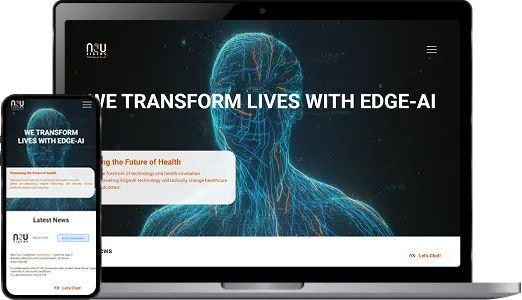
The client operates in the healthcare innovation space, focusing on leveraging advanced technologies to improve diagnostic processes and patient outcomes.
Their objective was to:
The client aimed to build an intelligent and scalable solution for early detection of skin cancer.
Primary Goals:
To achieve these goals, the following needs were identified:
Developing an accurate and accessible diagnostic solution using machine learning introduced several complexities.
Core Challenges:
Key Problems:
A comprehensive digital solution was developed, combining a machine learning-powered mobile application with a supporting web platform.
| Steps | Process Details | Deliverable |
|---|---|---|
| Image Capture & Upload | Healthcare professionals can:
|
Result: Easy and quick data input |
| Machine Learning-Based Analysis | The system processes images through trained ML models to:
|
Benefit: Faster and more accurate detection |
| Multi-Model Support | The platform allows:
|
Result: Continuous improvement in accuracy |
| User-Friendly Interface | The application is designed with:
|
Benefit: Usable by semi-trained healthcare professionals |
| Secure Authentication | The system includes:
|
Result: Enhanced data security and controlled access |
| Admin & Model Management | An admin panel enables:
|
Benefit: Ongoing system optimization |
| Scalable Cloud Architecture | A serverless infrastructure ensures:
|
Result: Efficient and responsive application |
Uses machine learning to assist in early detection
Enables screening in remote and underserved areas
Supports multiple models and datasets for improvement
Ensures safe handling of sensitive patient data
Before vs After
| Aspect | Before Solution | After Solution |
|---|---|---|
| Diagnosis Method | Manual & error-prone | ML-assisted & accurate |
| Accessibility | Limited | Remote & mobile-enabled |
| Detection Speed | Slow | Faster analysis |
| Scalability | Limited | Continuously improving |
| Data Security | Basic | Secure & controlled |

React Native

AWS (Serverless Architecture)

AWS Cognito (OTP-based login)

Image-based diagnostic models

Web + Mobile ecosystem
Scaling Personalized Physical Therapy Services with a Multifunctional Web Platform
Read More...
Increasing Patient-Reported Outcomes by 40% with a Digital Health Data Tracking Platform
Read More...
Enabling Insurance-Based Dental Treatment Recommendations with a Web App and Plugin
Read More...
At SynergyTop, we are more than just an IT company; we are your strategic partner for digital success. With a passionate team of experts, we craft innovative solutions that drive your business forward.


 contact@synergytop.com
 +1 619-349-4911


